Community Profile · Heritage Design
From Heritage Textile to Modern Wear: How Tunisian Craft Is Being Reimagined
July 23, 2026
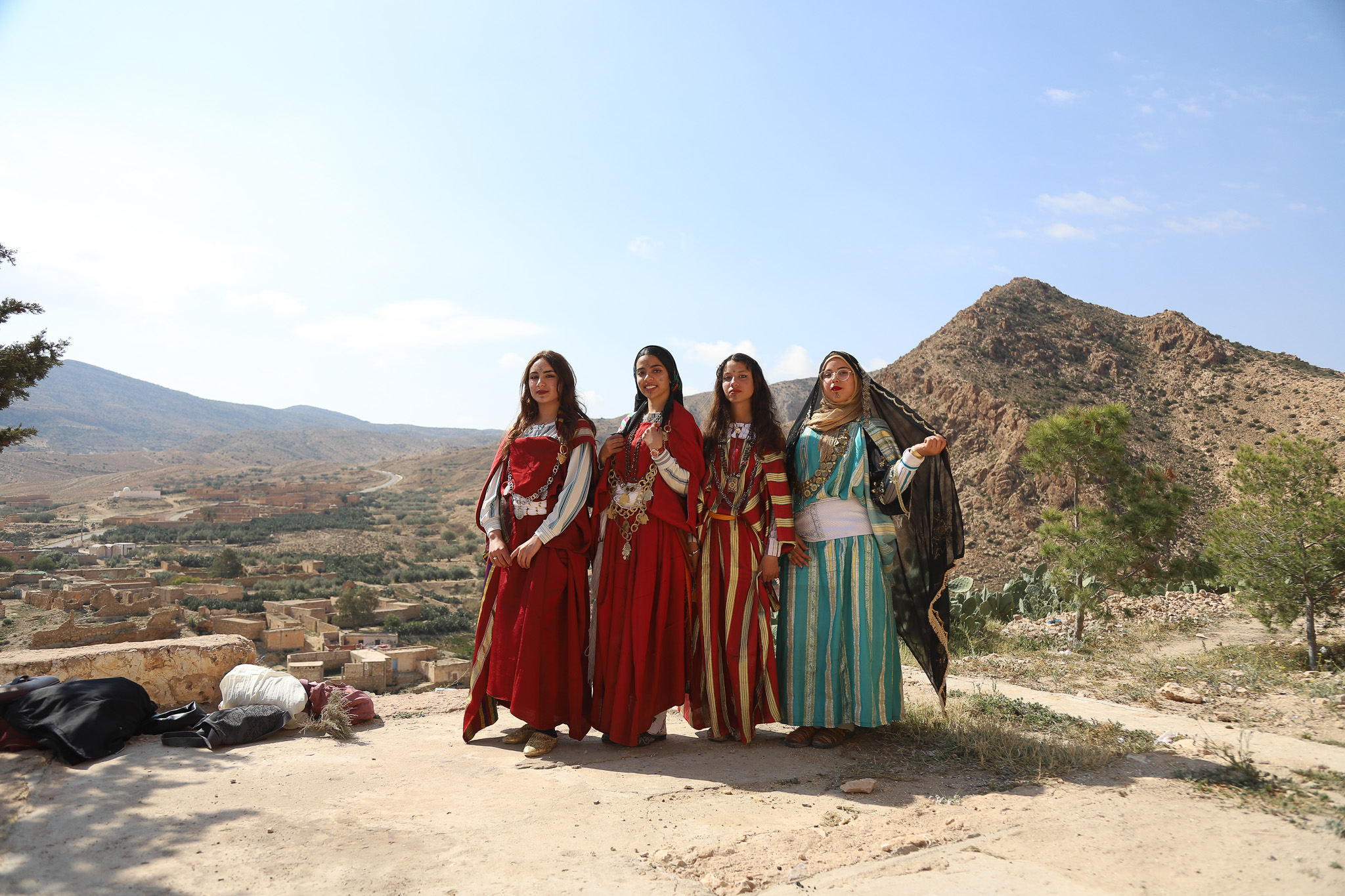
Using heritage fabrics like melia, sefseri, hrem, and tillas, they are building a new kind of slow fashion — modern, wearable, sustainable, and still deeply Tunisian.
What makes this work interesting is that it does not treat heritage as something fragile that must stay untouched. It treats heritage as material: something that can be cut, shaped, styled, and brought into daily life again.
Many of these fabrics come from older forms of women’s dress. The sefseri was traditionally used as a covering for women. The melia was wrapped and draped in different ways, often with regional colors and patterns. The hrem was a lighter woven layer used close to the body. These garments carried social meanings that do not always fit the way young women dress today.
But the textiles themselves still hold value.
Their colors, stripes, textures, and weaving techniques carry a visual language that is immediately Tunisian. The problem is not that the fabric has lost its beauty. The problem is that the original form is no longer wearable for many women’s lives today.
So the form changes.
A melia can become the structure of a dress. A striped heritage textile can become a fitted waist, a modern two-piece set, or a tailored jacket. A fabric once associated with older generations can appear in a silhouette that feels young, confident, and contemporary.
The result is not costume. It is not folklore. It is not a tourist souvenir.
It is clothing designed for the present, made from materials that carry the past.
This is also what makes the work part of slow fashion. These pieces are not cut from endless rolls of industrial textile. Many of the fabrics are woven by artisans using traditional looms, natural fibers, and methods passed down through generations. Some take several days to produce only one or two meters of fabric. Colors and motifs can vary from one batch to another. Once a specific weave is gone, it may not come back exactly the same.
That rarity is not just aesthetic. It reflects a real risk: the artisans who still know how to make these fabrics are few, and many are aging. Their knowledge lives in the hand, in rhythm, in repetition, and in years of practice. If there is no demand for the fabric, there is little reason for younger generations to learn the technique. But when young designers turn these textiles into clothing people want to buy and wear, the craft becomes economically relevant again.
That is what makes this kind of business important.
It does not only preserve fabric as an object. It helps preserve the ecosystem around it: the weavers, the looms, the techniques, the regional patterns, and the possibility that younger artisans may see a future in learning the craft. Demand gives heritage a reason to continue.
The designer has to work with the fabric rather than force it. Its weight, pattern, texture, and availability shape what the final garment can become. A handmade textile does not behave like factory fabric. It carries irregularities, density, and character. That is part of its value.
For women buying or wearing these pieces, the appeal is not only that they are beautiful. It is that they allow heritage to feel usable again. A woman may not wear a sefseri in its original form today, but she may wear a dress made from a heritage textile. She may not drape a melia the way women once did, but she may wear its pattern in a jacket, skirt, or modern set.
That is how culture stays alive without being frozen.
This kind of work also opens a different door into Tunisia’s tourism economy. A visitor may not want a generic souvenir, but they may be drawn to a garment with a real story: where the fabric comes from, who wove it, how long it took, what it was originally used for, and how it was transformed into something modern. The piece becomes more than clothing. It becomes a connection to place, craft, and identity.
For young Tunisian women entrepreneurs, this is a powerful space. They are not simply selling fashion. They are building small brands around heritage, sustainability, design, and storytelling. Their work connects artisans, fabrics, local memory, modern buyers, and cultural tourism.
That is why this business is featured by Tanit.
It represents the kind of heritage-based entrepreneurship Tunisia needs more of: creative, locally rooted, economically meaningful, and connected to the future. It shows that preserving culture does not always mean keeping it exactly as it was. Sometimes it means giving it a new form, a new market, and a new reason to be made.
The future of Tunisian craft may not look exactly like the past. It may look like a handmade dress, a tailored jacket, a limited textile collection, or a modern piece designed by a young woman who understands both tradition and the market.
The point is not to preserve fabric by leaving it untouched.
The point is to make it wearable again.
When that happens, heritage becomes more than memory. It becomes design, income, sustainability, and identity — carried into the future one piece at a time.