Insight · Cultural Tourism
From Sea to Sahara: The Many Faces of Tunisia
July 23, 2026
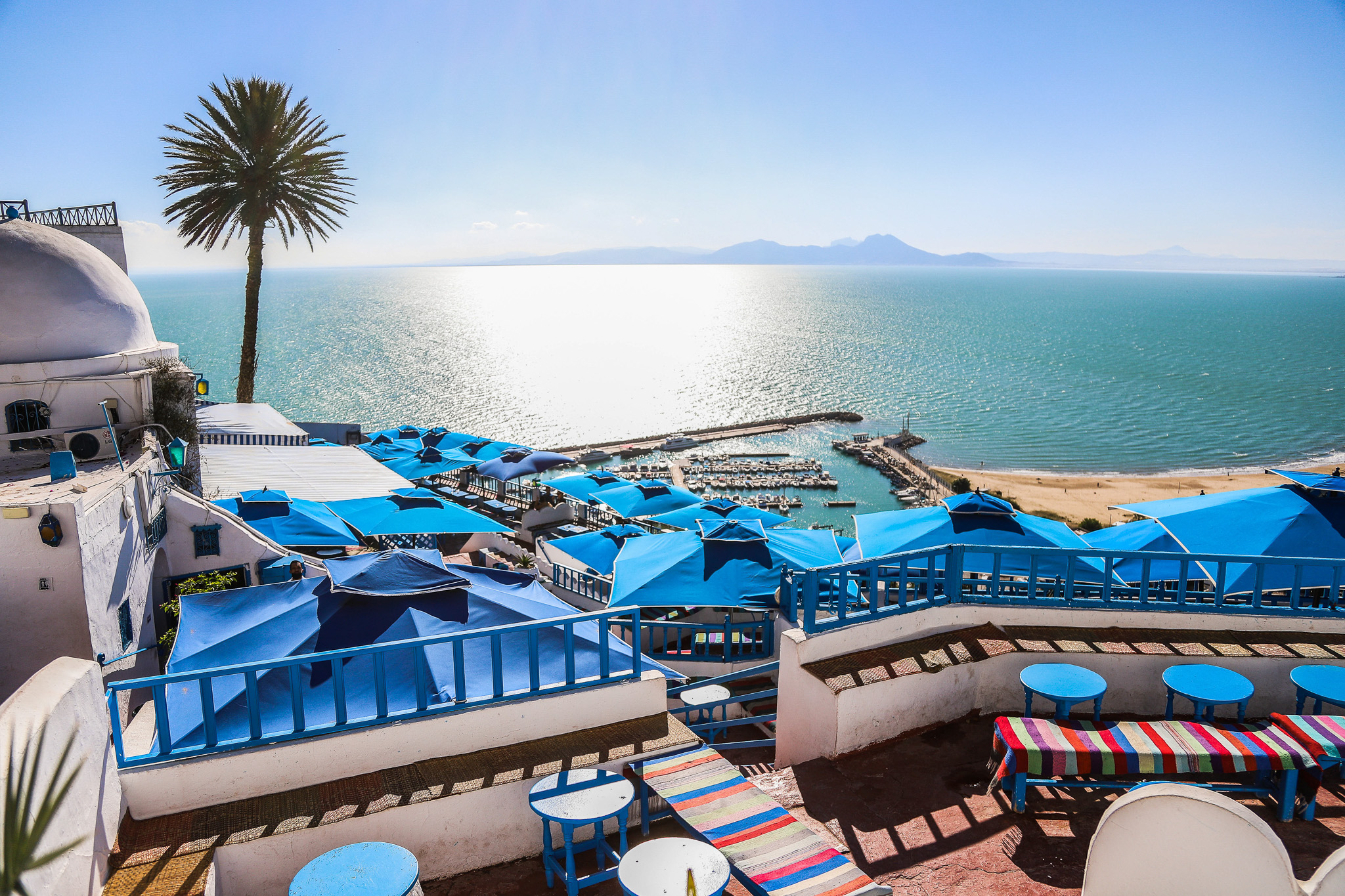
People often describe Tunisia as small, but that description can be misleading. Tunisia’s strength is not smallness — it is concentration: a rare density of landscapes, histories, and cultural traditions within one connected territory.
To travel through Tunisia is to watch the country change quickly and beautifully. The coast gives way to ancient stone, the capital opens into quiet ruins and sea views, the south turns to earth and palm groves, and the northwest brings forests, mountains, and a slower rural rhythm. This is the Tunisia visitors do not always see — layered, diverse, and deeply alive.
That diversity is what makes it one of the Mediterranean’s most underexplored cultural destinations.
In the capital region, the story often begins with contrast. Tunis is modern, busy, and layered. Its medina holds centuries of urban life in narrow streets, carved doors, courtyards, mosques, workshops, perfumes, books, copper, textiles, and quiet rooftop views. Nearby, Sidi Bou Said offers another face of Tunisia: whitewashed walls, blue doors, carved balconies, sea air, jasmine, ceramic tiles, and the feeling of a village suspended between the sky and the Mediterranean. Its blue-and-white identity was formally protected by decree in 1915. The colors were not invented for tourism; they became part of a protected architectural language that helped preserve the village’s character.
2 miles south, there is Carthage — not as a distant history lesson, but as one of the capital’s most striking places to move through. Roman baths open toward the sea. Columns, stone walls, old villas, and archaeological remains sit beside some of Tunis’s most elegant residential streets. From certain corners, you can look toward the Punic ports and feel how close the ancient city still is to daily life. Carthage is accessible, coastal, and quietly chic: a place where ruins are not hidden away from the city, but woven into one of its most beautiful neighborhoods.
South of the capital, Tunisia begins to change in color, rhythm, and texture. The Mediterranean brightness gives way to ochre hills, palm groves, dry stone, and landscapes that feel shaped as much by silence as by architecture.
In Matmata, homes are carved into the earth rather than built above it. From the road, they can almost disappear into the landscape; then the ground opens into circular courtyards, with rooms dug into the surrounding walls. These dwellings are practical, climate-smart, and deeply rooted in local knowledge — built to stay cool, protected, and close to the land. But they are also unforgettable. A visitor does not simply look at Matmata; they step down into it.
Further south, Douz and Tozeur offer two different doors into desert Tunisia. Douz is often called the gateway to the Sahara, but it is more than a departure point for dunes. It carries the atmosphere of desert routes, palm groves, open-air markets, camel traditions, and hospitality shaped by movement. Tozeur, by contrast, is an oasis city: dense with date palms, shaded paths, patterned brickwork, old quarters, and the feeling of water quietly organizing life at the edge of the desert.
Together, Matmata, Douz, and Tozeur show that southern Tunisia is not a single desert image. It is underground homes, oasis agriculture, desert towns, family hospitality, craft, architecture, and a slower way of encountering place. The south is cinematic, yes — but it is also lived-in, practical, and deeply human.
Tunisia also has a greener side that many visitors do not expect.
In the northwest, around places like Ain Draham, Tabarka, and the Kroumirie mountains, the country changes again. The air becomes cooler, the hills greener, and the landscape more forested. This is a Tunisia of mountains, cork oak trees, rain, stone villages, hiking paths, and a slower rural rhythm. It complicates the image of Tunisia as only beaches and desert. It shows a country with ecological and cultural variety, where nature-based tourism could grow alongside heritage and community travel.
In Zaghouan and its surrounding villages, another layer appears: mountain landscapes, water heritage, Roman aqueducts, rural traditions, and Amazigh cultural memory. The region connects natural beauty with deep history, from springs and agriculture to village architecture and old routes. It is the kind of place where tourism does not need to be loud to be meaningful.
This is what makes Tunisia so rich as a destination: it is not one thing.
It is Mediterranean and Saharan. Urban and rural. Roman and Arab. Amazigh and Ottoman. Coastal and mountainous. Ancient and young. Familiar and surprising. Its culture is not only in monuments, but in bread, tiles, textiles, music, doors, markets, courtyards, guesthouses, farms, workshops, and the way people welcome strangers into a place.
For tourism, this matters.
When a country is reduced to one image, many communities remain invisible. Beach tourism may bring visitors, but it does not always show the full value of a place. Cultural tourism can help widen that image. It can invite travelers to stay longer, move beyond the obvious routes, meet local businesses, buy from artisans, sleep in guesthouses, join small experiences, and understand Tunisia through the people who preserve its heritage every day.
That is the Tunisia Tanit wants to make more visible.
Not a staged version of the country. Not a postcard. Not a single destination. But a network of places, skills, stories, and small businesses that together show how much Tunisia has to offer.
From the blue-and-white streets of Sidi Bou Said to the ruins of Carthage, from Matmata’s underground homes to Douz and the Sahara, from the oases of the south to the green mountains of the northwest, Tunisia is not a country to be understood in one image.
It is a country of layers.
And the more closely you look, the more it opens.