Field Report · Matmata
Underground and Overlooked: How Matmata’s Women Are Turning Cave Homes Into a Tourism Economy
July 23, 2026
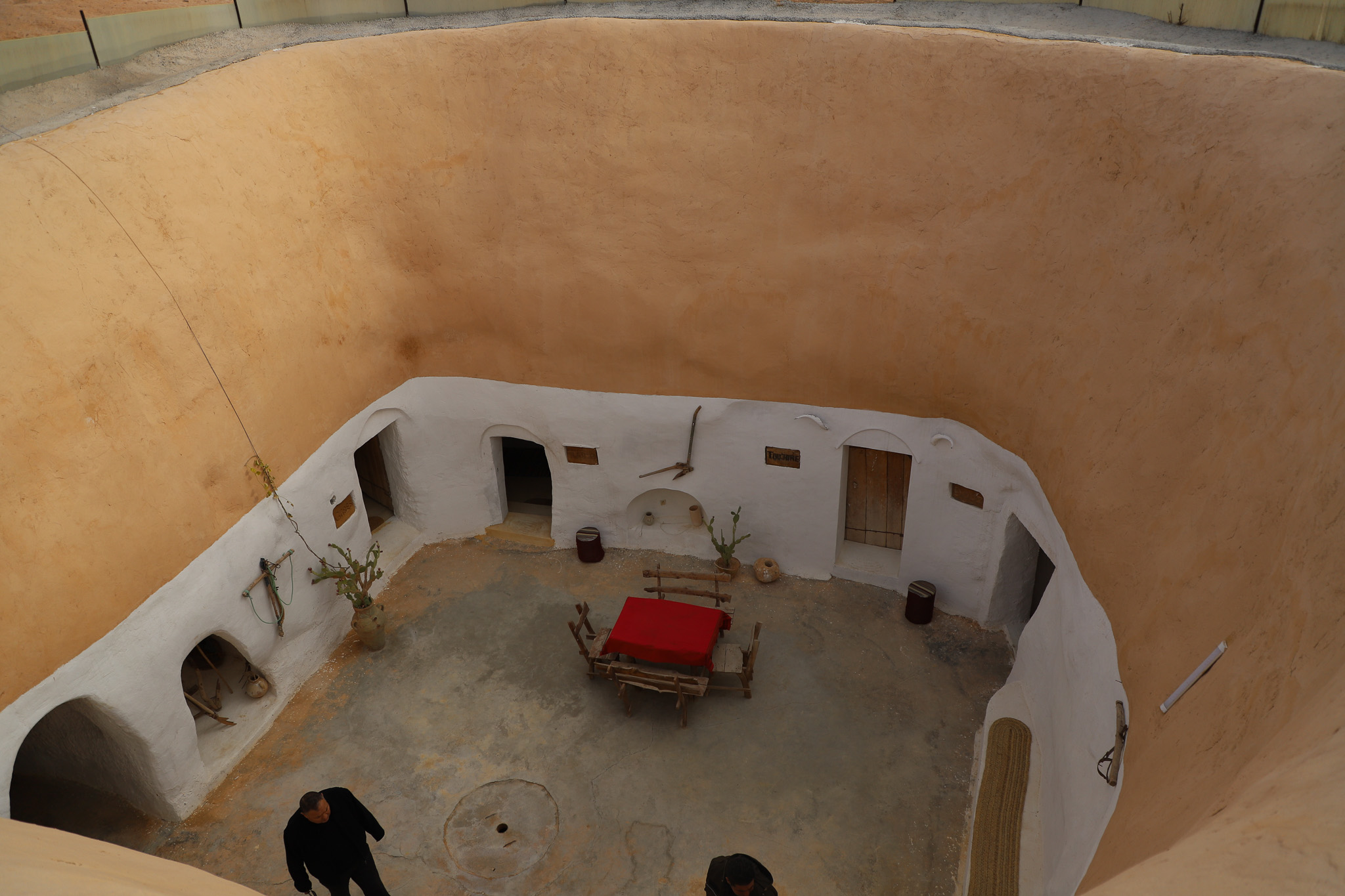
In these underground courtyards, tabouna bread is baked against the walls of earthen ovens, kilim patterns are remembered by hand, and daily traditions can become the foundation of a more intimate kind of cultural tourism.
From above, Matmata can almost disappear into the landscape. The hills are dry and pale, the earth is the color of sand and stone, and many of the homes are hidden below the surface. Then the ground opens into a circular courtyard, with rooms carved into the walls around it. What looks empty from the road suddenly becomes a home.
The design is both practical and beautiful. Instead of building upward, families built downward. The central courtyard brings in light and air, while the rooms carved into the earth remain cooler and more protected from the heat and wind. It is architecture shaped by climate, scarcity, and intelligence — a way of living with the land rather than against it.
Inside these homes, the courtyard is the heart of daily life. It is where people gather, cook, receive guests, and move between rooms. The walls are simple, often whitewashed, and the sky appears as a perfect opening above. There is something quiet and intimate about the space. It does not feel like a monument. It feels lived in.
For many international visitors, Matmata is also known because scenes from Star Wars were filmed there, especially at Hotel Sidi Driss, which became associated with Luke Skywalker’s home. But the real wonder of Matmata is not that it looked like another planet on screen. It is that these homes were built for real families, real weather, and real life long before cinema turned them into a destination.
This is what makes the tourism potential of Matmata so interesting. Visitors may come for the architecture, but what can make them stay longer is the experience around it: the food, the stories, the textures, the gestures, and the women who carry so much of that knowledge.
A piece of tabouna bread is not just bread. It is dough pressed against the hot inner wall of a clay oven, cooked by heat held in the earth, pulled out warm, smoky, and blistered. A kilim is not just a textile. It carries patterns, colors, and techniques passed through families. A courtyard is not just a photo opportunity. It is a space where hospitality, memory, and household knowledge become visible.
This is where women’s work matters.
In many traditional communities, women preserve the details that make a place feel alive: how food is prepared, how guests are welcomed, how wool is handled, how patterns are remembered, how rooms are kept, and how family practices are passed from one generation to the next. These skills are often treated as ordinary because they belong to the home. But for cultural tourism, they are valuable.
When women are able to open these spaces to visitors on their own terms, they are not simply showing tradition. They are shaping a tourism experience. A courtyard meal, a bread-making demonstration, a weaving session, or a conversation about how underground homes were built can become a source of income, pride, and recognition.
That kind of tourism is very different from passing through, taking a few photos, and leaving. It asks visitors to slow down. It allows them to understand Tunisia through people and places that are often left outside the main tourism image. It also gives economic value to heritage without removing it from its roots.
The challenge is that this potential often remains informal. A family may have the home, the knowledge, the recipes, the craft, and the hospitality, but not the visibility, professional photos, visitor materials, language support, or small investment needed to turn that into a sustainable activity.
That is the kind of gap Tanit is interested in.
Not changing Matmata into something staged. Not turning private culture into performance. But helping heritage-rich tourism actors become more visible, more prepared, and better connected to opportunities that allow them to benefit from the value they already preserve.
Matmata may be underground, but it should not be overlooked. Its dwellings are living spaces shaped by climate, memory, women’s work, hospitality, and local intelligence. With the right kind of support, they can become part of a more inclusive tourism economy — one where the people who keep Tunisia’s heritage alive are also able to build livelihoods from it.